
Hybrid working: Is the model already dead or our future?
The pandemic has forced us to work from home. Many love it, some hate it. I personally belong to the first group. But more and more companies are putting pressure on employees with return-to-office policies.The reasons: social isolation, a weakening corporate culture, and declining performance. (Harvard Business Review)
But is that really true or is hybrid working an opportunity for the future?
Why “back to the office” is not a solution
Major companies like Amazon, UPS, Boeing, Walmart, and JP Morgan Chase are demanding a return to the office, five days a week, eight hours a day.
The reality: Many companies have reduced office space and can no longer accommodate all of their employees. Those who force a return risk frustration, high turnover, and poor performance. (Gartner HR Research)
"Back to the office" sounds like control, not a modern work culture.
And if there is one thing Millennials and Gen Z dislike, it is the feeling of being controlled. These generations require greater autonomy and desire a better work-life balance than the Baby Boomers enjoyed. And rightly so, I believe. Rising burnout rates and an increasingly fast-paced work environment are pushing the human brain to its limits. With AI seemingly accelerating the pace of everything even further, we surely deserve to shift down a gear ourselves, enabling us to return to a healthier and, above all, more motivated state in our daily work lives.
And hybrid working is simply part of a better work-life balance.
Hybrid working has demonstrable benefits
A return to the old model means stagnation instead of progress. Studies clearly demonstrate the advantages of hybrid work models:
- Better work-life balance. (Cisco Study)
- Less stress and more time for health and social life. (IWG-Study)
- Resource savings and cost reduction (commuting, office space). (The Hybrid Cost Saver)
A pure "return-to-office" policy, on the other hand, creates additional costs and leads to crowded open-plan offices and flex desks, which, according to studies, are the most unpopular workplaces of all. (OST, 9)
Why open-plan offices are so unpopular and how we can improve them can be found here: Open-plan office
I know many people whose daily commute takes two hours or more, a trend that has intensified significantly over the past two decades. This time is not compensated; the burden falls entirely on the employee. Companies set up operations in cantons with attractive tax rates, whereas individuals continue to choose where to live based on social ties. Social connection is a fundamental human need, and people should not be penalized for it. A hybrid work environment offers relief for commuters and, incidentally, for Switzerland’s entire infrastructure.
What companies should do instead
Hybrid working is not a ready-made recipe, but a learning process. Successful companies continuously develop their models through:
- Prototyping & Testing – small experiments instead of rigid rules.
- Employee surveys – anonymously and honestly to understand real needs.
- Individual solutions – because there is no “one-size-fits-all” strategy.
Those who really listen create a work culture that truly strengthens motivation and performance.
lisannco is an expert in shaping new work environments. If you would like to learn more about how I work with companies, you can find the relevant link here: Office design
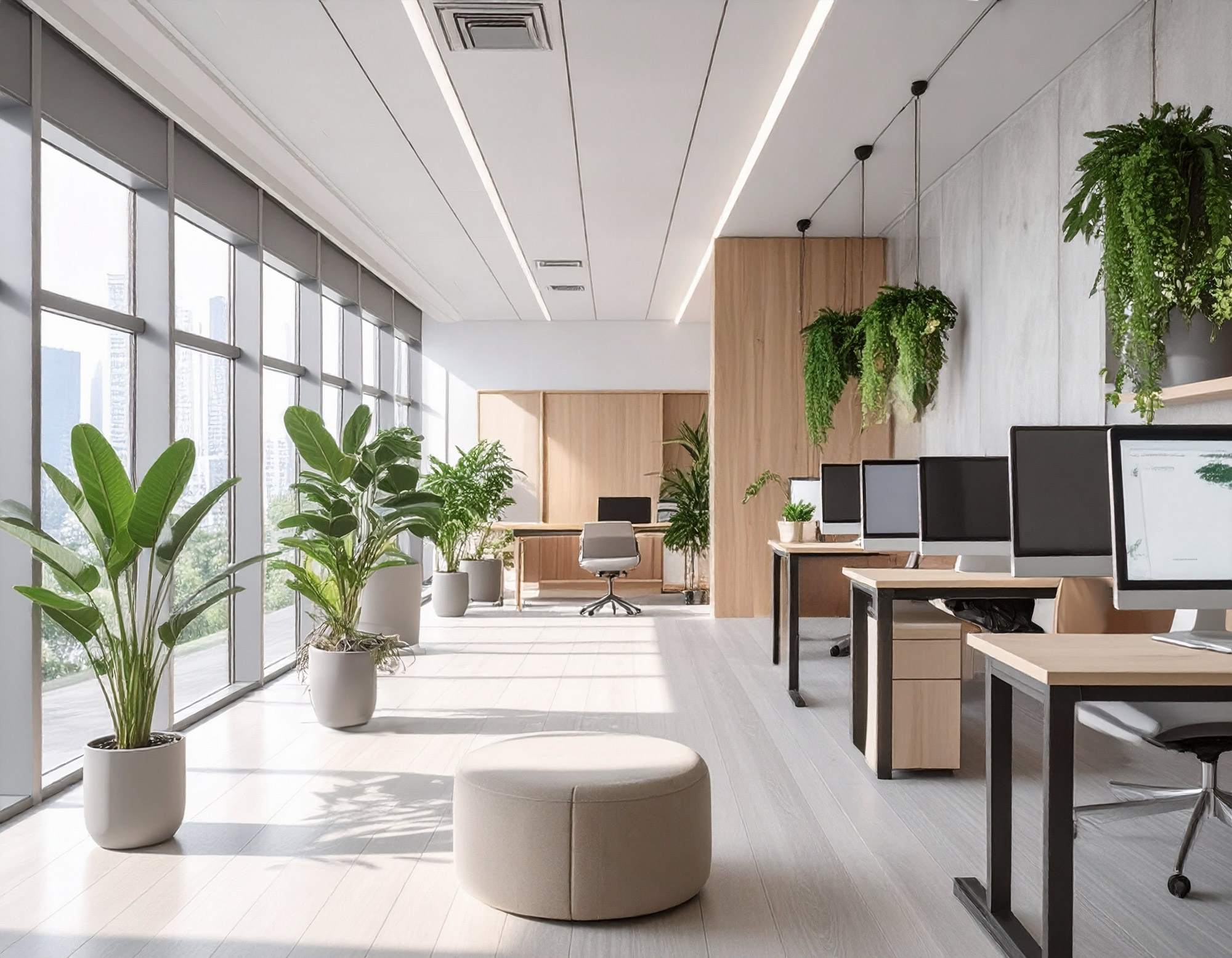
Rethinking office design: Is this what the office of the future looks like?
The office of tomorrow is not a place where presence is compulsory, but a place for collaboration, culture and ideas. A comprehensive article about the office of the future can be found here.
- For creativity & innovation: open spaces for exchange and brainstorming
- For training & mentoring: space for small working groups with a communicative setting
- For focus & implementation: Rückzugsorte oder Home Office
- For culture & belonging: places to meet and for activities without pressure to perform
Perhaps the office of the future will no longer even need traditional desks. It will become a motivational and cultural center, while the home office remains the basis for focused work.
You can find tips for setting up an efficient home office here: Home Office
Conclusion: Hybrid working has a future if we design it correctly
Hybrid working is not a dying breed, but an opportunity. It requires courage to develop new structures and the will to find the right rhythm for companies and employees.
DO YOU WANT TO MAKE IT WORK?
lisannco Interior Design supports you in developing spaces and systems that optimally facilitate hybrid working. For motivated teams, increased performance, and a sustainable work culture.
FAQ
What are the benefits of hybrid work for companies and employees?
Hybrid working significantly boosts employee satisfaction, yielding long-term benefits for the entire company. By offering the option to work from home, the company signals trust in its staff, enabling them to operate autonomously and with greater flexibility. For employees, this brings immense relief, as it allows for a better work-life balance and drastically reduces commuting times, the latter also easing the burden on Switzerland’s infrastructure. Hybrid working fosters a more positive attitude among employees toward their employer and strengthens their sense of connection to the company. Additionally, the company can cut costs through potential reductions in office space and lower ancillary expenses.
How often should employees work in the office?
How often employees should come into the office depends on the nature of their work and should be assessed on an individual basis. However, regular face-to-face contact between employees remains essential for maintaining a strong corporate culture and cohesive teams. Innovation and development also thrive on teamwork and require regular exchange. Focused work, on the other hand, benefits from quiet and concentration, conditions that often work quite well in a home office setting.
How should an office for hybrid work be designed?
Flexible. An office designed to support hybrid work must demonstrate flexibility in both its layout and its mindset. A flexible work environment allows for a reduction in floor space when employees are not always in the office. At the same time, there are "peak times", days when many people are on-site simultaneously to drive innovation through active teamwork, for instance. A flexible spatial concept helps accommodate these varying requirements. Mindsets must be flexible, too; hybrid work should not be viewed as a rigid system, but rather as an evolving process. The mechanics of hybrid work require regular review and optimization to ensure long-term success.