

Biophilic, Neuroaesthetic & Salutogenic Design – More than buzzwords?
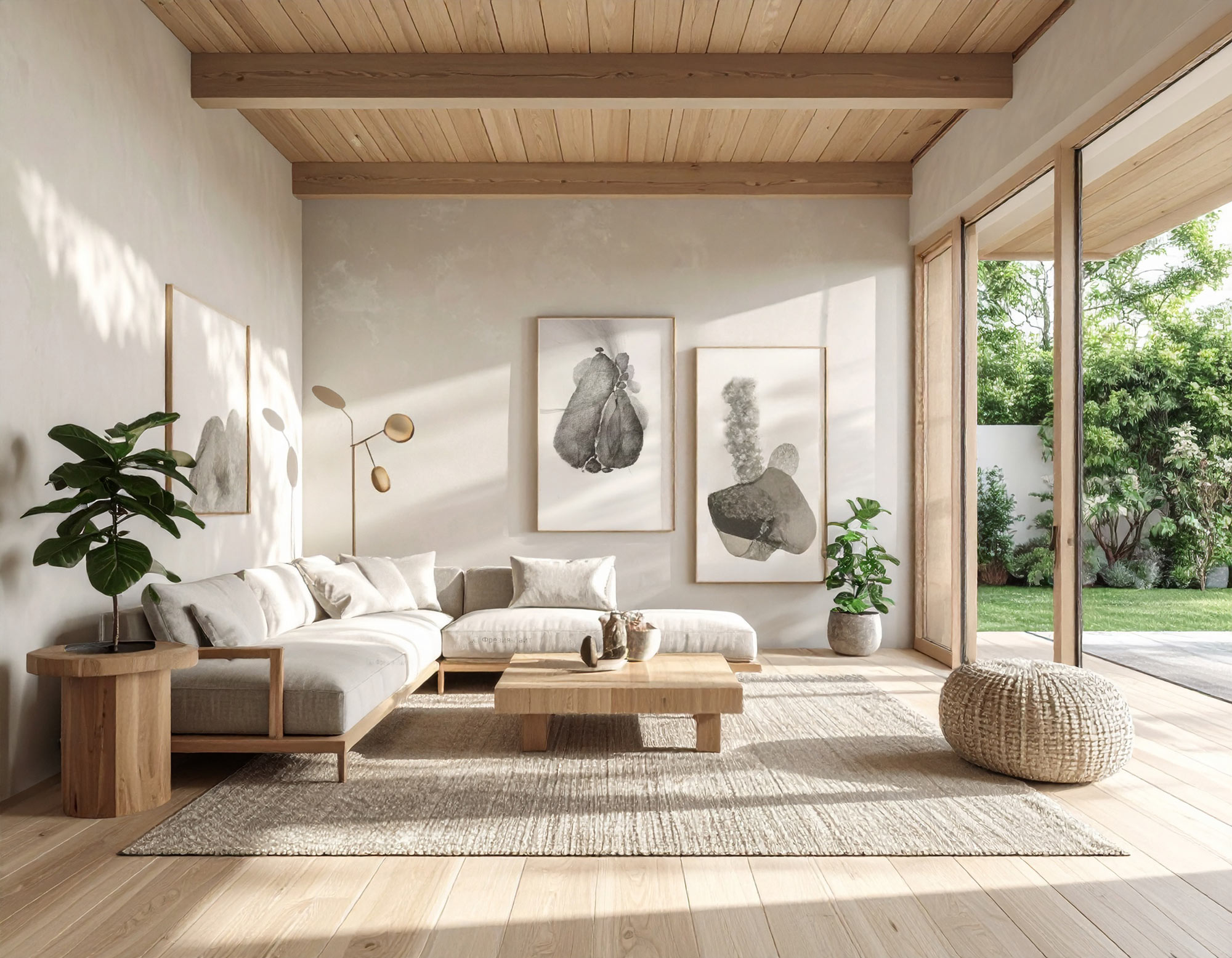
Most people have heard of Biophilic Design. gehört. Neuroaesthetic Design and Salutogenic Design are two additional terms that are appearing more and more frequently in interior architecture and design discourse.
But what do these concepts actually mean?
Are they just fashionable buzzwords, or is there real substance behind them?
This article takes a closer look at all three approaches:
where they come from, what they stand for, and how they can be meaningfully applied in interior architecture.
Biophilic Design – Nature as a core design principle
Biophilic Design is rooted in the Biophilia Hypothesis, which suggests that humans have an innate biological connection to nature and that natural environments positively affect health and wellbeing (Wilson, 1984).
The aim of Biophilic Design is therefore to shape built environments in a way that maintains or restores this connection to nature, for example through:
- views of nature or greenery
- natural daylight and daylight strategies
- natural materials such as wood, stone or living plants
- the integration of water as a design element
- organic forms and patterns found in nature
Numerous studies show that biophilic environments not only enhance subjective wellbeing, but also reduce stress, improve mood and increase cognitive performance.
Research has even shown that short exposure to biophilic interiors, such as spaces with plants or nature-based elements, can lead to reduced prefrontal brain activity and improved emotional recovery, demonstrating the restorative potential of nature-informed design (MDPI).
My article "How spaces influence our well-being" provides a clear overview of all factors that have an impact on our well-being in built spaces.
Neuroaesthetic Design – How the brain experiences space
Neuroaesthetic Design draws from neuroscience, environmental psychology and architectural psychology. It explores how architectural elements are processed by the brain and how they influence emotional, cognitive and physiological responses.
The term neuroaesthetics was introduced in the 1990s by neuroscientist Semir Zeki, who studied why certain artworks are perceived as beautiful. These insights were later transferred to architecture and spatial design.
A systematic review by Assem et al. describes, among other things, the following findings:
- High ceilings: Often associated with feelings of freedom and linked to increased creative thinking
- Materials and textures: Wood tends to promote calmness, comfort and focus, while materials like steel, concrete or glass can heighten alertness.
- Forms: Curved forms are generally perceived as more pleasant than sharp-edged ones. Some studies suggest that sharp angles may trigger stronger amygdala activation (our fear center), although evidence here remains inconclusive.
Neuroaesthetic Design aims to consciously influence inner states such as stress levels, attention and emotional balance and research shows that intentionally designed spaces can measurably influence our perception and emotional experience.
Salutogenic Design – Designing for health
Salutogenic Design is based on the Salutogenesis Theory developed by medical sociologist Aaron Antonovsky In contrast to pathogenesis, which deals with the origin of disease, salutogenesis asks:
What keeps people healthy?
At its core is the Sense of Coherence (SOC)), consisting of:
- Comprehensibility: How well can a person categorize and understand their environment?
- Manageability: How capable do they feel of coping with the demands of their environment?
- Meaningfulness: The extent to which life and actions feel emotionally meaningful.
The stronger this sense of coherence is, the higher the probability that a person will remain healthy in the long term.
Architect Alan Dilani later translated this model into architectural design. In spatial terms, this can mean:
- Comprehensibility: clear layouts, logical circulation, visual clarity
- Manageability: control over lighting, temperature and acoustics, spaces for reflection and recovery
- Meaningfulness: integration of art, culture, movement and social interaction
Salutogenic Design is especially prominent in healthcare and therapeutic environments, where architecture actively supports recovery and self-efficacy (Frontiers).
How these approaches interact
Biophilic, Neuroaesthetic and Salutogenic Design are not isolated concepts.
All three address how built environments can support human wellbeing beyond aesthetics.
They demonstrate how light, materiality, proportions, nature and spatial organisation work together to influence body, mind and emotions.
These approaches are not esoteric, but grounded in scientific research.
Where these concepts are particularly effective
These design principles are especially impactful in environments where many people spend extended periods of time:
- Office environments and workspaces – for stress reduction and increased performance (see also this article)
- Schools and educational institutions – to promote concentration and learning ability
- Healthcare and nursing facilities – to support healing and regeneration
- Public spaces and libraries – as places for retreat and encounter
Here we can generate real added value for the general population if we make use of these principles and rethink living spaces.
Where science reaches its limits
As valuable as scientific findings are, they provide averages, not individual truths.
Everyone experiences space differently; this is particularly evident in color psychology, where studies can reveal significant subjective differences. Therefore, these concepts are not a one-size-fits-all solution for private residential design. kein Patentrezept.
For this reason, these approaches should be seen as tools rather than universal solutions in residential design.
In private homes, meaningful design emerges through dialogue with the individual.
At lisannco Interior Design for Zurich this dialogue is central.
Through careful analysis, empathetic listening and strategic thinking, spaces are created that are not theoretically neuroaesthetic or salutogenic, but deeply personal and supportive of those who live in them.
You can find out how an Interior Architect can help you plan your home holistically here .