


Wood Imitations in Residential Design – appearances are deceiving
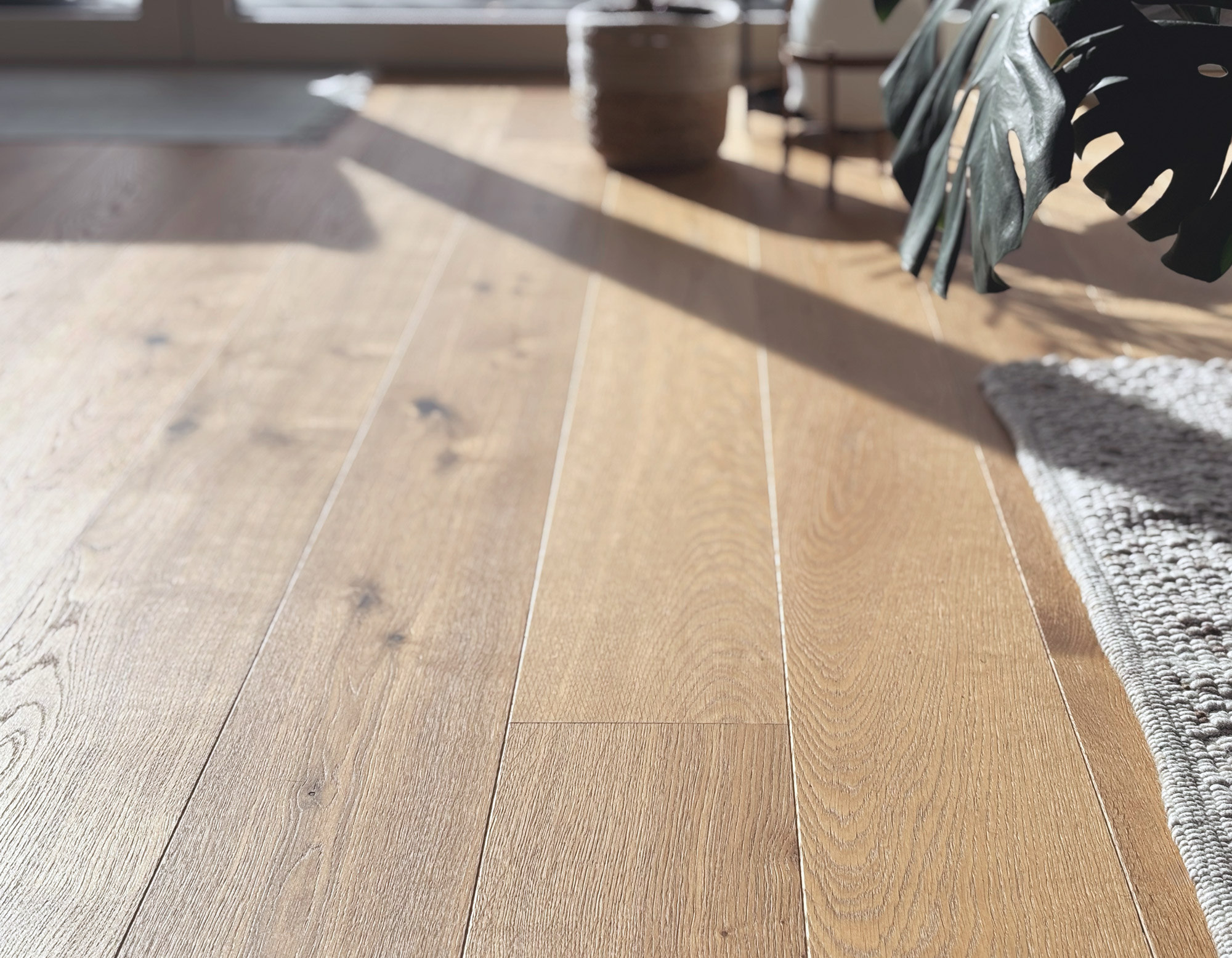
Laminate, tiles or resin coatings: wood optics are everywhere, and technology keeps improving. To the eye, they are often hard to distinguish from real wood.
So why am I against using them in residential interiors? Here’s why.
The advantages of wood imitations
Wood imitations do have their strengths. Tiles and resin coatings are often tougher and easier to maintain than real wood. Tiles can look like new for years, while wooden floors show life’s traces: scratches, dents, stains.
Massive wood requires occasional care, sanding or oiling, while synthetic surfaces are content with a damp cloth.
But that’s where the benefits end. Many people choose fake wood because they fear the effort of maintenance without realising what they’re missing out on. The very real qualities of true timber.
Interior design and the five senses
Humans are primarily visual beings, meaning we experience our environment mainly through our eyes. But we also have four other senses: hearing, smell, taste, and touch.
Even though we are hardly aware of these senses in everyday life, they shape our experience of a space at least as much.
Good interior design is not just about visual aesthetics; it incorporates all the senses into the spatial design.
Hearing – wood is alive
When we walk through the forest, we hear creaking and groaning. Even in old houses, you can hear the beams expanding and moving. Wood is alive. It absorbs moisture, expands, releases it, and contracts.
What we hear is part of a vibrant indoor climate.
Apart from that, wood is rather quiet. A parquet floor is less sound-reflective than tiles and therefore contributes to more pleasant acoustics.
Smelling – the unmistakable scent
We all know it, and almost all of us love it: the smell of wood.
While a parquet floor or a solid wood table doesn't smell like a pine forest, our brains still perceive even the subtle notes, and they affect us subconsciously.
How quickly smells are perceived has been investigated by chinese scientists : humans can perceive smells almost as quickly as colors.
Wood offers even more benefits for our respiratory system. Untreated wood, in particular, possesses antimicrobial properties: viruses, bacteria, and other pathogens have difficulty multiplying on it.
Furthermore, wood's ability to absorb and release moisture helps regulate the humidity in a room.
All of this contributes to a healthy indoor climate.
Touch – why wood touches us
A tile floor with a wood look is revealed as an imitation at the latest when we walk on it barefoot. The tactile experience of wood is unique. Even a tabletop made of solid oak (a hardwood) feels velvety and smooth. Each piece is unique in structure and grain.
Wood is perceived as warm by humans (source: SpringerOpen), which is due in part to its color spectrum, but also to its surface texture and low thermal conductivity. The perceived warmth is therefore not only visual, but also arises from our sense of touch.
The impact of wood on wellbeing
Considering how wood appeals to our senses, it's no surprise that numerous studies confirm its positive effect on well-being.
While our minds are thinking just about the maintenance required, our subconscious instinctively knows how good wood is for us.
Study examples
- Cognitive performance enhancement through a wood environment – The study Impact of Wooden Versus Nonwooden Interior Designs on Office Workers‘ Cognitive Performance found that participants in rooms with wooden elements achieved significantly better results in neuropsychological tests (e.g., Visual Reaction, Stroop Test). Source: PubMed
→ Wood not only supports well-being but also concentration and efficiency. - Physiological relief through wood materials – In In Human Physiological Responses to Wooden Indoor Environments blood pressure, heart rate, and skin conductance were measured. Rooms with wood resulted in less tension and fatigue, and the autonomic nervous system reacted more balanced. Source: PubMed
→ Wood has a calming effect on body and mind. - A comprehensive review on wood and well-being – The overview Positive Aspects of Using Solid Wood in Interiors on Human Wellbeing: A Review analyzed 31 studies (1989–2021) and confirms: People have a strong, positive connection to solid wood elements – both visually and haptically – with measurably less stress and higher productivity. Source: Hrčak
→ Wood has scientifically proven effects: It reduces stress and promotes well-being.
Conclusion: Only real wood creates real well-being
The facts speak for themselves: Only real wood has a positive, multisensory effect on us.
The imitation may deceive the eye, but not our other senses.
There's nothing wrong with using tiles or resin surfaces if you prefer low-maintenance materials. But then the patterns and colors should be authentic: no wood look.
And surely there's a place where real wood has its place. A touch of warmth in the room, not just visually, but for all the senses.
If you have a home that could use some help, you've come to the right place. lisannco Interior Design creates spaces that appeal to all the senses and generate a feeling of well-being.