


Retreat Spaces – The Quiet Powerhouses of Modern Workplaces
In every company that talks about New Work, the term retreat space shows up. At least on paper. But what does “retreat” actually mean? And is there a universal solution?
The short answer: No.
The longer one: We withdraw for completely different reasons, which means we also need different types of retreat spaces.
In this article, I introduce the most important categories, explain their purpose and highlight what truly matters in their design.
Retreat spaces for confidential conversations
When people think of retreat spaces, images of phone booths, meeting pods or small enclosed rooms usually come to mind. And indeed, these spaces respond to one of the strongest human needs in the workplace: privacy.
We need these kinds of spaces whenever we must have conversations that are not meant for everyone’s ears:
• a difficult call with a client
• a personal conversation with HR or a manager
• any situation that requires distance from the open office
Effective spaces provide:
• room for 1–2 people
• a surface for writing or placing documents
• reliable acoustic shielding
Because the need for privacy exists in every company, privacy retreats should be part of every office.
Retreat spaces for exchange and innovation
This form of withdrawal arises from an almost opposite motivation:
Not because we seek silence but because we want to encourage energy, creativity and dynamic collaboration. fördern wollen.
The goal is not protection but freedom.
Often, these areas do not need to be fully enclosed. Creative energy can, and sometimes should, flow outward. Yet depending on the task, even creative teams benefit from a degree of separation to maintain focus and reduce distractions.
With flexible furniture, sliding elements, folding partitions or acoustic curtains, you can create spaces that function both as open collaboration hubs and as retreat zones. sein können.
Whether companies need this zone depends heavily on their culture and areas of activity. If creativity is part of their DNA, this space is a powerhouse for driving innovation.
Retreat spaces for focused work
This is where one of the biggest misconceptions in office design occurs. Many companies equate “concentrated work” with phone booths or small single-person focus rooms and then struggle to provide enough spaces for all employees.
But the underlying need is not privacy.
It is: undisturbance.
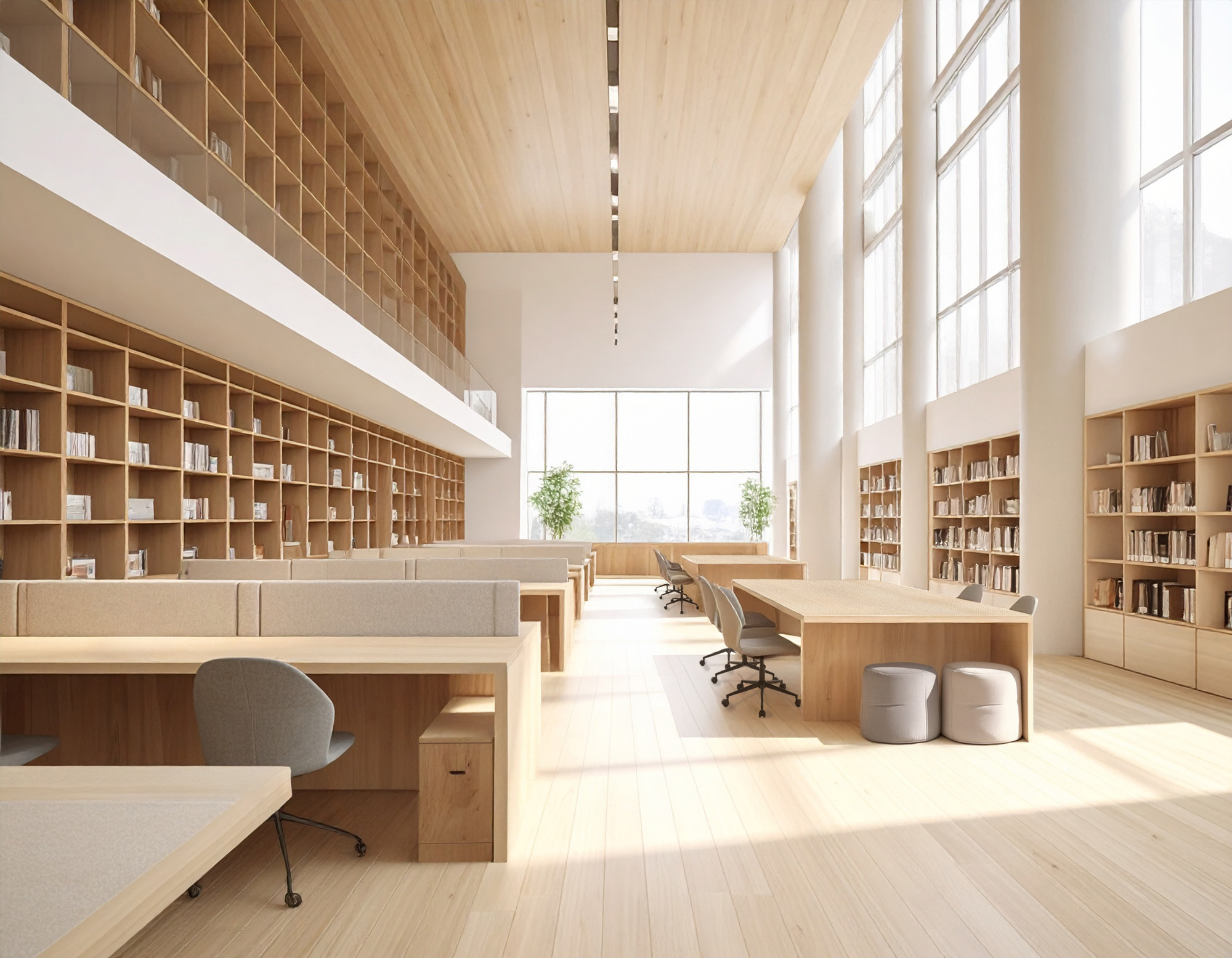
A space for deep work doesn't have to be small and enclosed. Rather, it needs clear parameters, much like a library. And precisely these kinds of deep workspaces are true performance boosters and should be a staple in every office.
A high-performing focus zone can be designed as:
• a larger room with multiple workstations
• with good acoustic damping
• no phone calls or spontaneous conversations allowed
• with muted colors and minimal visual stimuli
• with calm sightlines
• with plants for visual grounding
• with clear behavioural rules
All around the world, people go to libraries to study and work because the environment enables concentration.
These conditions can be created in offices as well, supported by small rituals that make the transition into deep work tangible, such as removing shoes before entering the focus zone to shift into a quieter, more intentional mindset.
Retreat spaces for recharging
Our world is overstimulating: notifications, emails, meetings, artificial light..
What our brain processes in a single day would have been unthinkable three generations ago.
This makes genuine restorative spaces indispensable. Not the casual break room with table football, and not the small fitness room (although both can be great additions), but a multisensory environment designed for true mental recovery.
A restorative retreat might include:
• warm, dimmed lighting
• soft fabrics and natural materials
• gentle soundscapes or nature sounds
• loungers or armchairs for short resets
• small nooks with curtains for power naps
• subtle scents, inviting textures, balanced temperatures
A real recovery space must engage the senses. Only then do we anchor ourselves in the present moment and truly unwind.
Conclusion: Retreat spaces are essential building blocks of modern Workplace Culture
Retreat spaces are not nice-to-have.
They meet fundamental human needs and significantly influence wellbeing, satisfaction and performance.
Some needs are universal, like privacy or the need for recovery. Others emerge from the nature of the work, the team structure and the company culture.
This is why a meaningful concept always requires dialogue between management, employees and interior architecture..
At lisannco Interior Design I make these needs visible:
• through qualitative and quantitative analyses
• through a deep understanding of psychological and cultural dynamics
• through collaboration with all levels of an organisation
• through concepts that transform not only rooms but also atmospheres
Retreat spaces are not furniture arrangements.
They are strategic building blocks of modern leadership.