


What a Home Office really needs – for efficiency and wellbeing
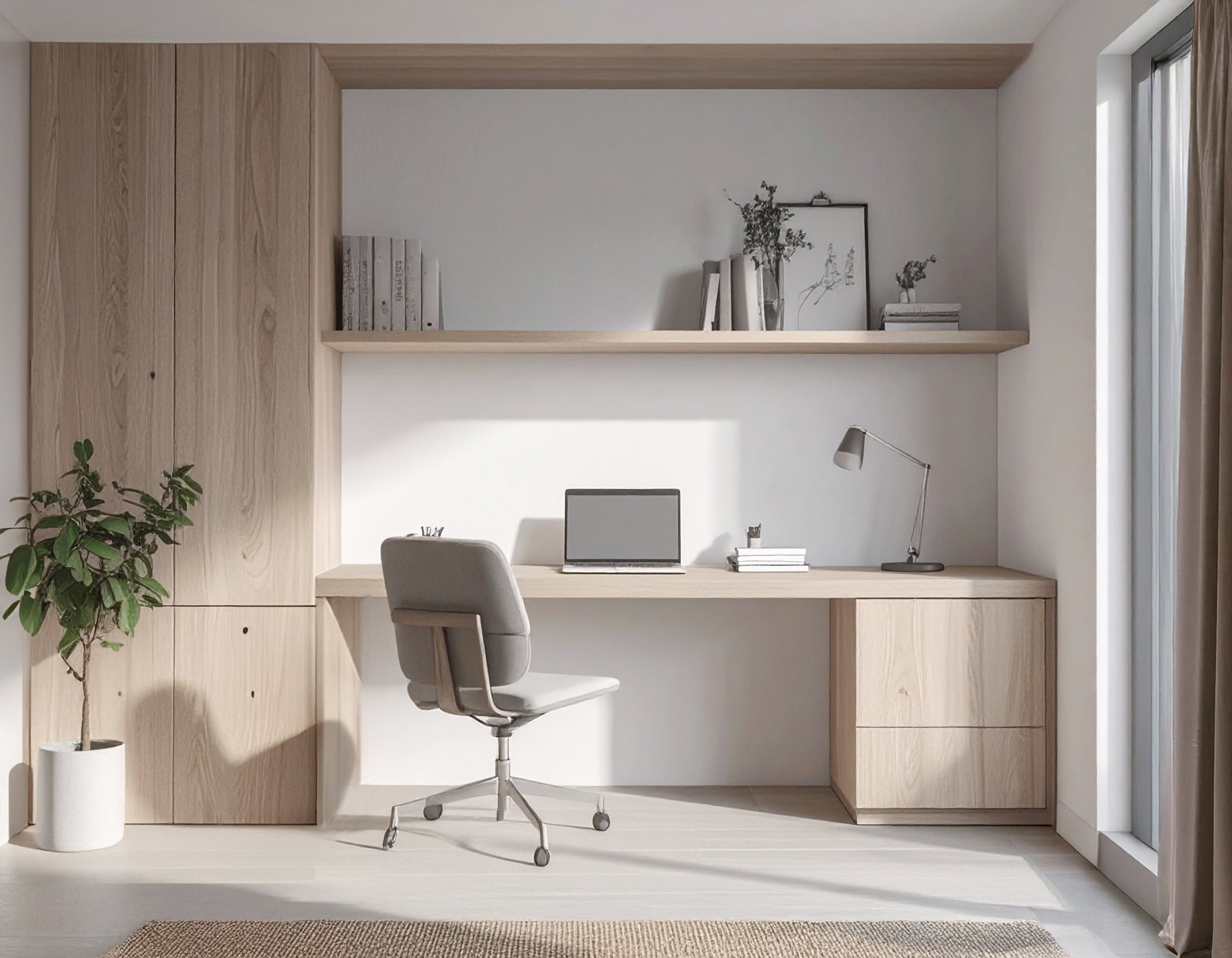
For many, working from home has become part of everyday life. Hybrid work models are still popular among companies, yet not all employers are convinced of their teams’ productivity at home. In fact, many home offices can’t compare in quality and functionality to well-designed office workspaces.
The good news: a functional home office isn’t a question of budget, but of smart planning.
Here’s what really matters when designing a home office that supports focus, health, and creativity.
The right location
Not everyone has the luxury of choosing the perfect spot at home. Still, a bit of rearranging or rethinking can make a big difference.
Key factors to consider:
- Natural light: Daylight is essential for focus, performance, and mood. Artificial lighting alone isn’t enough.
- Room climate: Avoid cold rooms (like unheated bedrooms) or overheated spots by south-facing windows without proper shading.
- Quiet zone: Choose a space away from family areas and street noise whenever possible.
Even if compromises are necessary, thoughtful adjustments can transform almost any corner into an efficient workspace.
The right desk size
The size of your desk should match the type of work you do:
- Digital work only: 120–140 cm width is usually enough.
- Creative or other analogue tasks: At least 160 cm recommended.
- Depth: Less than 60 cm is too shallow for long working hours — 80 cm is ideal for arranging everything comfortably and for allowing enough space for the legs under the desk
A deeper desk also helps reduce eye strain and headaches caused by sitting too close to large screens.
Ergonomics – movement over perfection
An ergonomic chair is great, but the real issue is static sitting. Movement is key.
Helpful adjustments include:
- A chair with a flexible backrest and smooth-rolling wheels
- A height-adjustable desk to switch positions easily
- A timerto remind you to take breaks (arguably the most effective tool)
Most adults can maintain focus for around 90 minutes before concentration drops. That’s your cue for a short break: stand up, stretch, move your body, and rest your eyes by looking into the distance (not at your phone!). Small habits, big impact.
Interrupting your own workflow isn't easy, I know that all too well myself. Even a timer doesn't always work. That’s why I’m a fan of apps that simply lock your screen after a set time, effectively forcing you to take a break. Examples of such apps include Freedom or Cold turkey Blocker.
The right lighting concept
Our biological rhythm follows natural light. Poor lighting makes us tired and unfocused.
Here’s how to support your energy through light:
- Nutze das natürliche Licht – der Schreibtisch sollte seitlich zum Fenster stehen. Kommt das Licht von vorne, riskierst du ebenfalls eine Überanstrengung der Augen durch Blendung. Sitzt du mit dem Rücken zum Fenster spiegelt sich das Licht in deinem Bildschirm.
- Add smart lighting (HCL*): cool, bright light for mornings; warm, soft light for late afternoons.
- Combine a task lamp (table lamp) and uniform room lighting (a standing lamp with indirect light or soft lighting panels on the ceiling) to protect your eyes from strain.
*HCL – Human Centric Lighting means to adjust brightness and color temperature of light sources throughout the day to mimic natural daylight, thus synchronising with our biological rythm. Especially helpful in dark winter months to prevent fatigue.
If you would like to learn more about how light affects people, you can do so in this article. .
Acoustics – quiet spaces boost focus
Noise distracts and increases stress. Good acoustics matter, even at home.
Here’s how to improve yours:
- Use rugs, curtains, or acoustic panels to reduce echo.
- Check opposite surfaces: if both are hard, soften one with textiles or sound-absorbing materials.
- For kid or traffic noise, acoustic treatment won’t help much. Noise-cancelling headphones or soft background music are the best options.
Try to schedule deep-focus tasks during quieter times, for example, when the house is empty or the kids are at school.
Order & Organization
A cluttered workspace creates mental noise. Keep your desk minimal: only what you truly need should stay visible.
Nutze rolling cabinets or small sideboards to store supplies. Drawers offer a better overview and are preferable to compartments.
The topic of tidiness has a significant impact on our stress levels. You can find out more in this article..
And remember: aesthetics matter. A visually pleasing environment boosts motivation, but too much decoration becomes a distraction. Aim for calm, functional elegance.
Conclusion: A functional Home Office doesn’t have to be expensive
A great home office isn’t about luxury furniture. It’s about smart design, organization, and understanding your own work habits.
Once you know what supports your focus and energy and what drains it, you can create a workspace that makes working from home productive, inspiring, and joyful.
You can find a detailed article on how spaces influence our well-being here.
If you need help designing your home office or finding the right spot for it in your home — lisannco Interior Design in Zurich and Beyond is happy to help you. And if you also want to know, how a modern office work environment should look like, read my guidelines for the office of the future.
FAQ
How do I set up an ergonomic home office?
An ergonomic home office setup is one that encourages you to change your posture regularly. Muscles and joints are designed for movement, and frequent changes in position help them remain resilient in the long run.
An ergonomic office chair with casters and an adjustable backrest, combined with a height-adjustable desk, allows you to switch between sitting and standing without interrupting your work. When working while standing, items such as yoga blocks or a footrest placed under the desk can help you stay in motion.
However, regular breaks are the most important thing. Ideally, stand up every 60 to 90 minutes, stretch, take a few steps, and give your eyes a brief rest by looking into the distance.
What kind of lighting is best suited for a home office?
Just as in the office, the same applies to the home office: good lighting consists of multiple light sources.
Natural daylight is the most important factor, as it is proven to support concentration, productivity, and well-being. Ideally, daylight should fall onto your workspace from the side to avoid screen glare.
In addition, bright, broad-area general lighting, such as a large ceiling light or panel light, ensures even illumination of the room. It should be dimmable and have a neutral light color.
A flexible desk lamp is also recommended for your workspace. Models with adjustable brightness and variable color temperature are particularly practical. Cooler light aids concentration during the day, while warmer light in the evening signals the body to gradually shift into rest mode.
How do I set up a home office that fosters concentration?
A home office that fosters concentration is designed to minimize distractions and is well-lit.
A tidy, minimalist desk reduces visual distractions and creates mental clarity. That is why you should keep only the items you need regularly within easy reach.
Good acoustics are equally important. Noise and frequent interruptions increase stress and make it difficult to work with focus. Studies show that, on average, it can take around 20 minutes to regain our initial level of concentration after a distraction.
Lighting also plays a crucial role. A desk lamp with adjustable color temperature allows you to use cooler, energizing light during the day to boost focus, and switch to warmer light in the evening to support your natural biorhythm.